The Indoor/Outdoor Design Wall Dissolving
Global Market & Floor Analysis
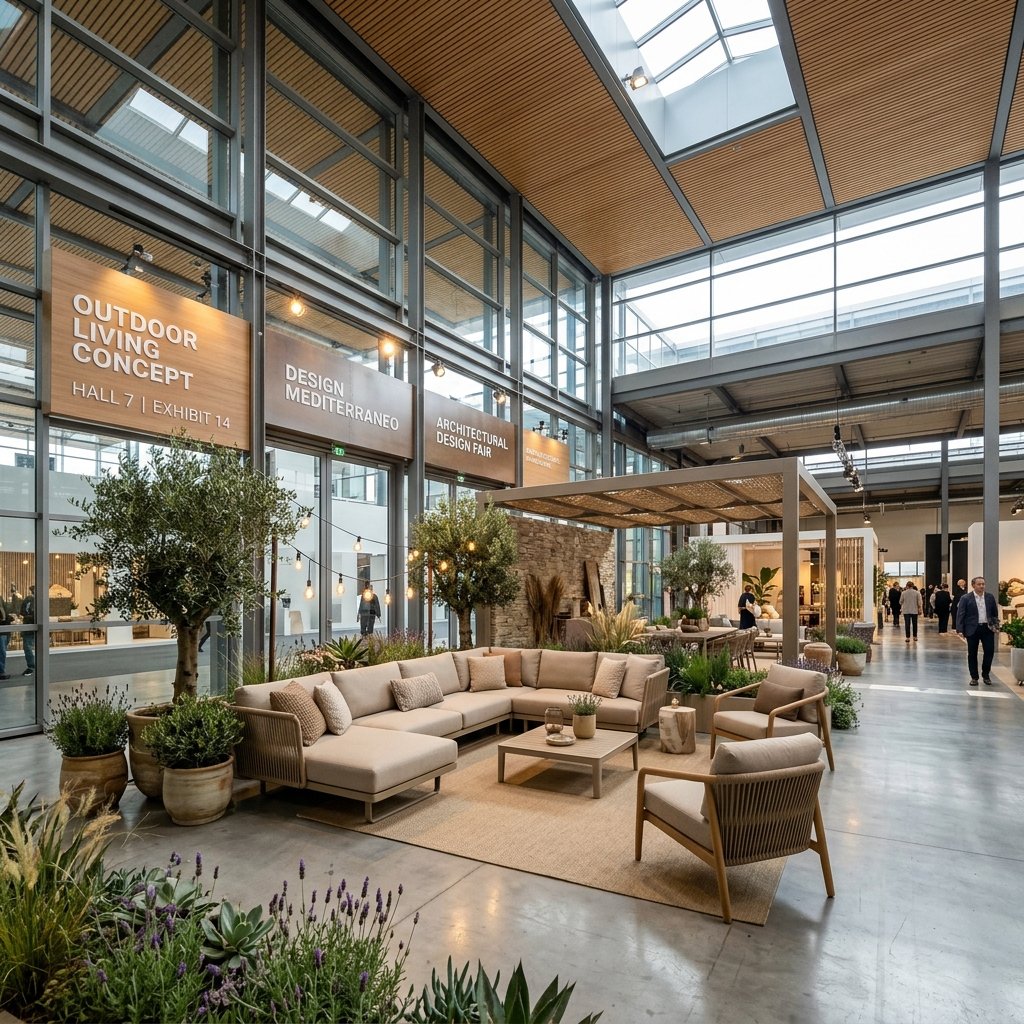
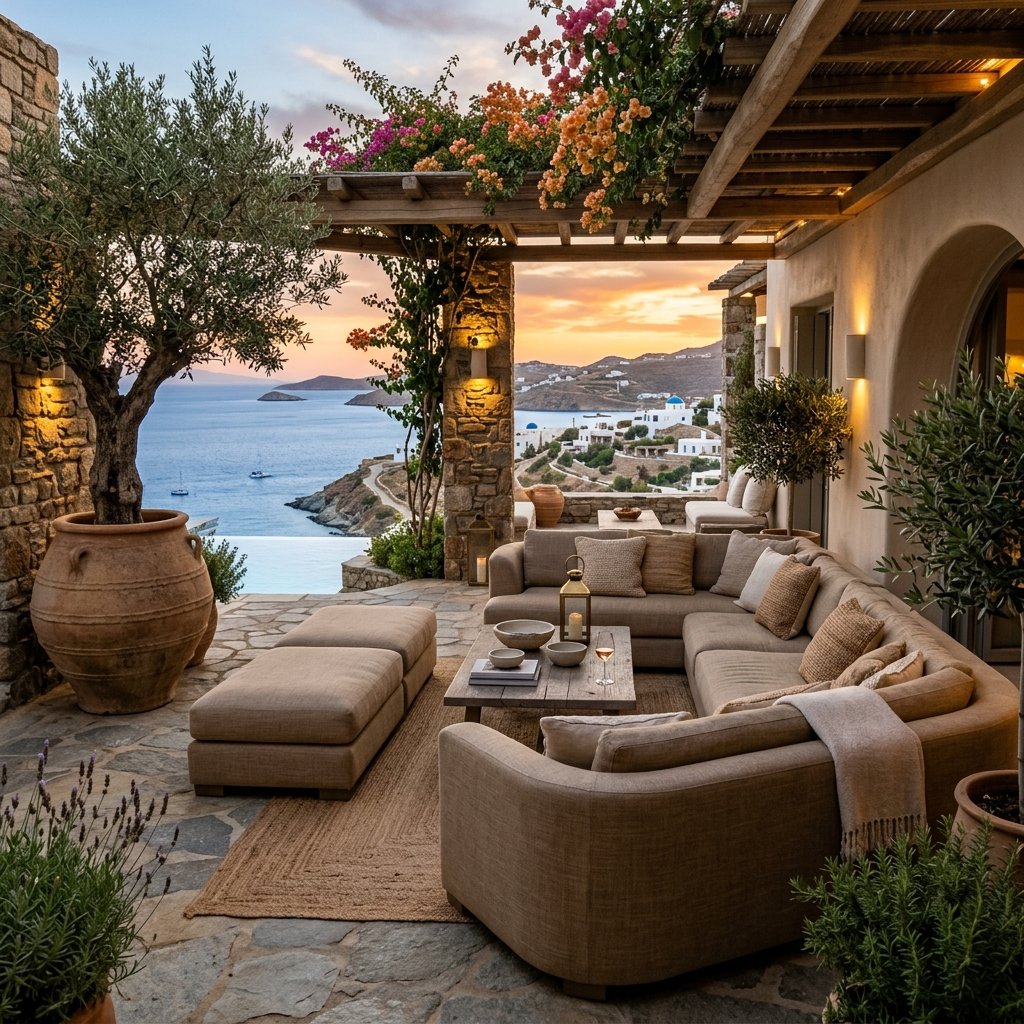
The psychological and aesthetic demarcation between interior living room spaces and exterior patios has been entirely eradicated. Driven by the "Warm Minimalism" movement, the 2027 outdoor assortment is unequivocally defined by deep-seating proportions, fully upholstered silhouettes, flowing organic shapes, and tonal Mediterranean palettes—terracotta, aubergine, sage green, and warm olive.
Consumers are demanding outdoor furniture that replicates the tactile comfort and visual warmth traditionally reserved for indoor living rooms, rejecting harsh, purely utilitarian metal and rigid sling designs. At spoga+gafa 2026, Hartman Outdoor Products introduced its "Shades of Colour" collection, framed explicitly around layered earthy tones and soft upholstery that fosters psychological relaxation.
Buyer-Side Strategic Implications
For 2027 assortment planning, retail buyers must aggressively pivot capital away from visually austere, hard-angled dining sets and rigid metal seating. Floor space should be reallocated toward deep-seating collections upholstered in performance textiles such as outdoor bouclé, chenille, and solution-dyed acrylics.
Showroom and catalog merchandising must abandon isolated product shots in favor of complete interior-style vignettes. Bundling upholstered sofas with outdoor rugs, textured throw pillows, and ambient lighting drives significantly higher average order values (AOV) and premium gross margins.
Modularity as the Core Unit of Sale
Global Market & Floor Analysis
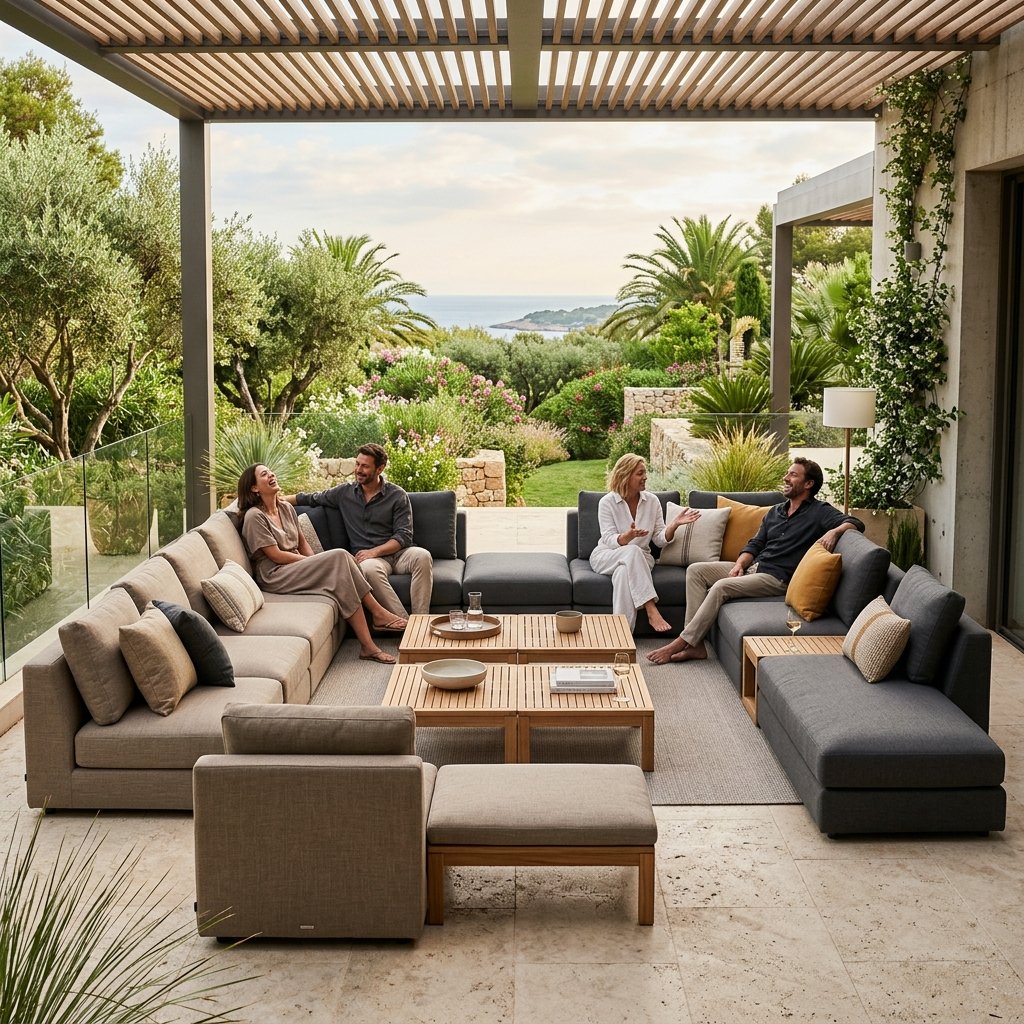
Demand for fixed 5-piece or 7-piece patio sets is shifting toward modular seating configurations that allow retail shoppers to customize layouts to their exact space constraints. Consumers require combinable lounge systems, single-seater inserts, corner wedges, and adjustable ottomans that allow for fluid, customized layouts adaptable to evolving social scenarios and varying footprint constraints—from sprawling suburban decks to compact urban balconies.
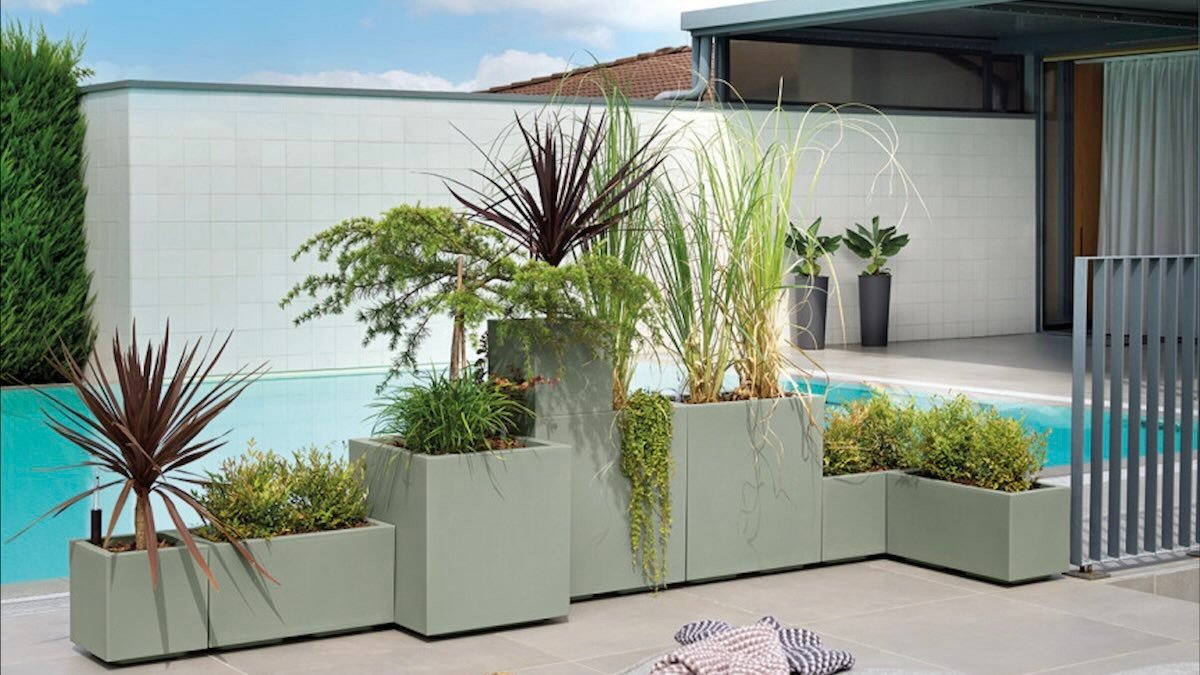
At spoga+gafa 2026, ZEBRA’s COZY Lounge demonstrated this with its Flex Seating System, enabling a standard sofa to be mechanically adjusted and rearranged into a sprawling 236x128cm reclining daybed. This modularity trend extends beyond seating into structural elements: Veca SPA debuted the "Materia" modular system of pots and planters, providing homeowners and landscape architects with total creative freedom to build customized spatial configurations and privacy boundaries.
Buyer-Side Strategic Implications
Retail buyers must fundamentally restructure their purchasing architecture from "pre-packaged static sets" to "collections of individual SKUs." By offering modular pieces (e.g., corner chairs, armless inserts, and modular coffee tables), retailers eliminate purchase friction for consumers navigating non-standard patio dimensions.
While transitioning to a modular SKU strategy requires sophisticated inventory management, it drastically reduces the financial liability of holding unsellable, oversized fixed sets at the end of the season. Furthermore, modularity drives exceptional customer lifetime value (LTV): consumers return in subsequent seasons to purchase additional modules to expand their configurations.
Material Authenticity Without Maintenance Liability
Global Market & Floor Analysis
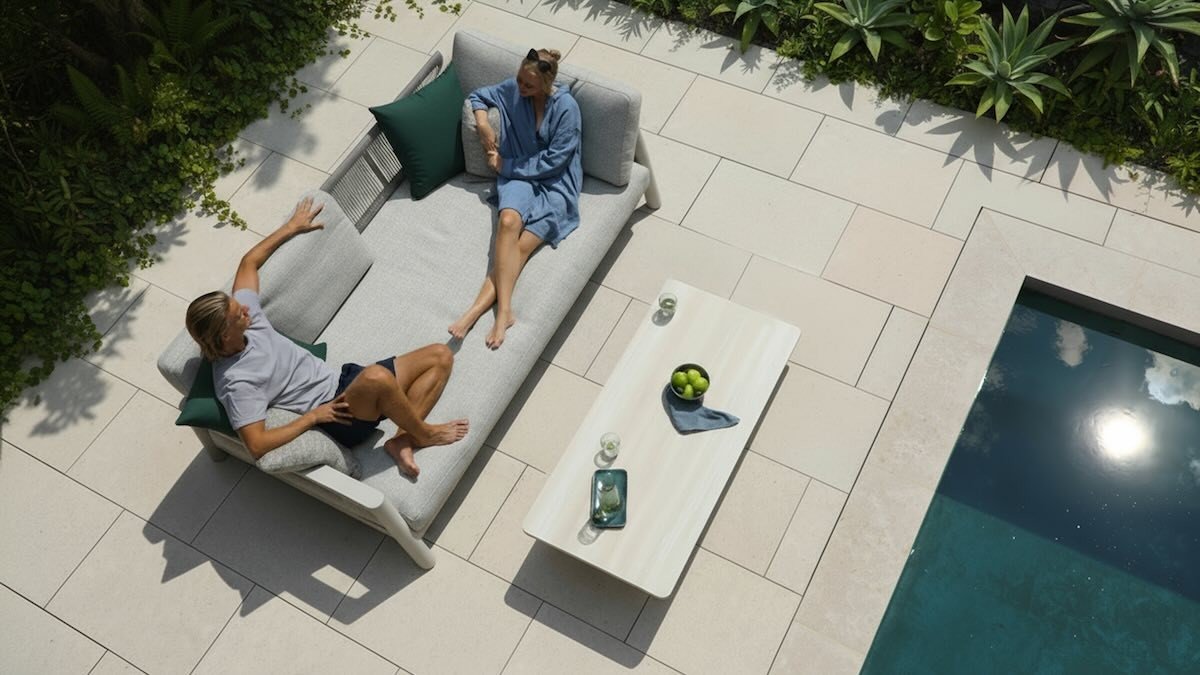
Modern residential buyers prefer the visual warmth of natural wood and stone while avoiding the recurring maintenance, sealing, and weather wear associated with organic materials. Consequently, the industry is witnessing a massive surge in advanced composite engineering, delivering high-fidelity wood-effect and stone-effect finishes on highly durable, weather-resistant resin and aluminum substrates.
A prominent example of this material transition at spoga+gafa 2026 was Keter’s 1,400-square-meter pavilion, heavily promoting its proprietary "DecoCoat" technology. Applied to outdoor storage structures and deck boxes, DecoCoat provides a premium, highly realistic wood grain appearance (in Ashwood and Walnut) while resisting cracking, peeling, rotting, and severe winter snow loads without requiring sanding or staining.
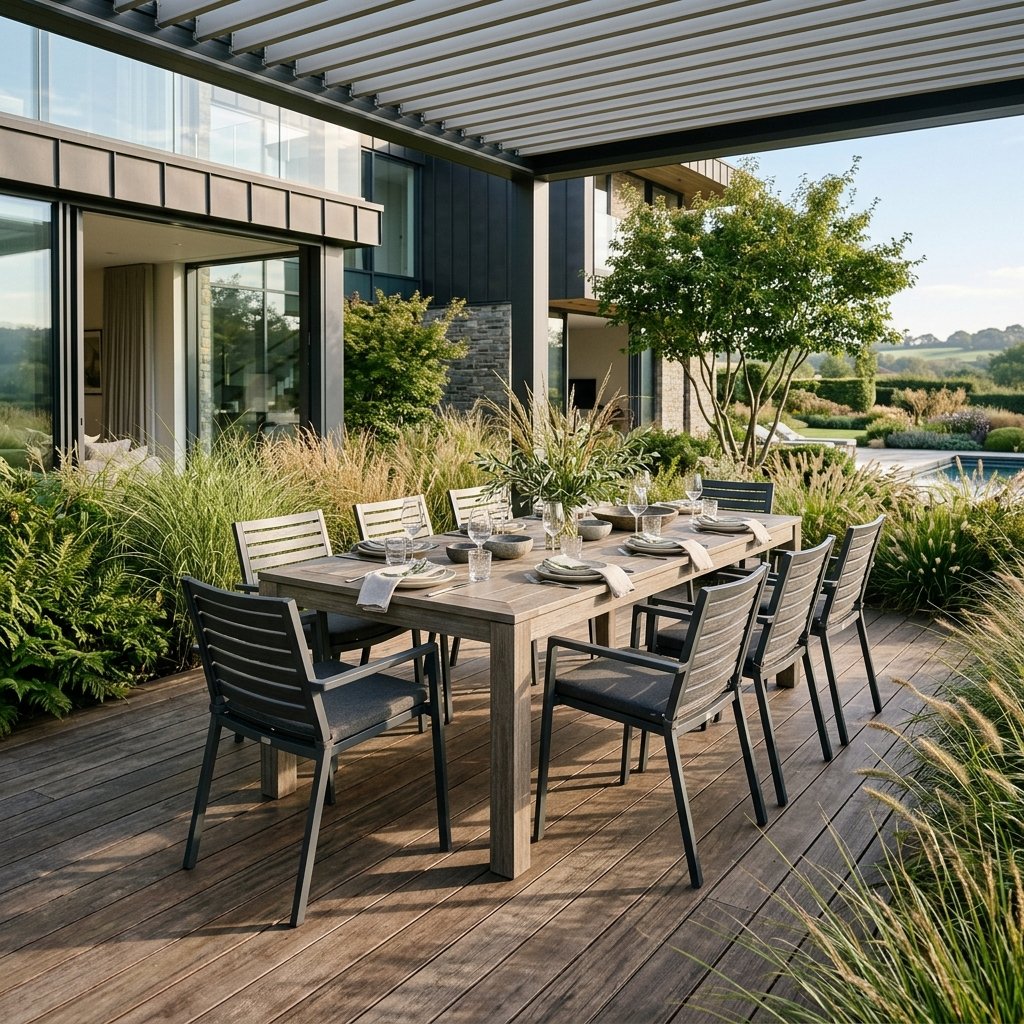
In outdoor dining furniture, high-density polyethylene (HDPE) lumber ("Polywood") continues to gain market share across mid-tier and premium assortments, while the category is led by the rise of "Polywood"—high-density polyethylene (HDPE) crafted from recycled plastics that mimics the warmth of lumber while remaining impervious to moisture, insects, and stains. Simultaneously, outdoor dining tables are transitioning toward sintered stone and outdoor-rated ceramics that emulate natural marble while surviving freezing temperatures without cracking.
Buyer-Side Strategic Implications
The strategic imperative for retail buyers is the systematic elimination of low-grade, high-maintenance natural woods (such as acacia or untreated eucalyptus) from mid-tier assortments, reserving genuine timber strictly for ultra-premium, FSC-certified Teak collections. Assortment budgets must pivot heavily toward engineered Polywood and ceramic composites.
Retailers command premium margins for Polywood and composite stone by aggressively marketing the "zero-maintenance" and "weatherproof" value propositions. Sales collateral must clearly articulate that these materials survive harsh winter climates without degrading, directly justifying the higher initial price point compared to entry-level plastics or cheap woods.
Year-Round Usability Reshaping Assortment Planning
Global Market & Floor Analysis
The conceptualization of the patio as a purely summer destination is entirely obsolete. Assortment planning is being aggressively reshaped by "shoulder season" usability. Integrated heating, robust weather-resistant textiles, and architectural all-season shade are now expected as standard features, unlocking significant revenue opportunities for retailers in late autumn and early spring.
The consumer desire to extend the outdoor living season has catalyzed a surge in products engineered to mitigate extreme climate variables. The spoga+gafa layout reinforced this with the "Outdoor Adventure" hall, celebrating all-weather outdoor lifestyles regardless of ambient temperature.
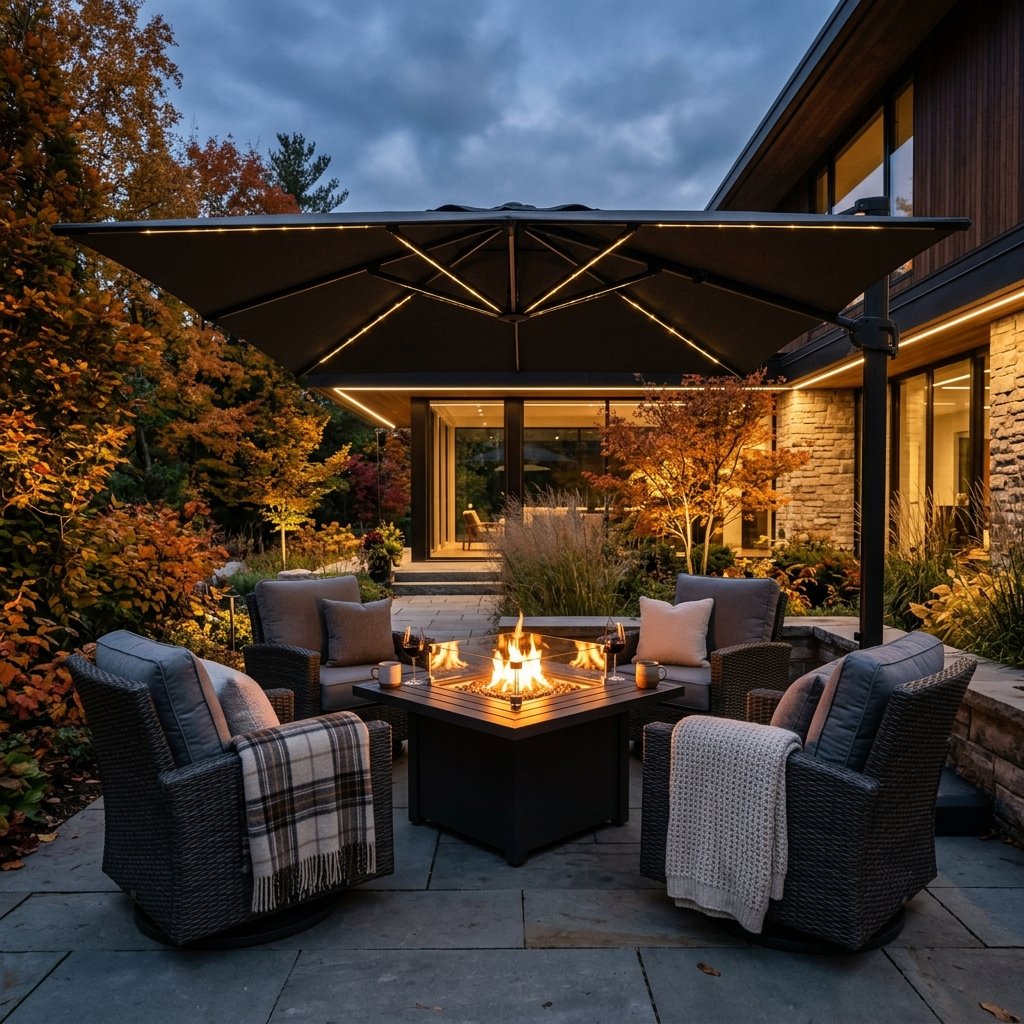
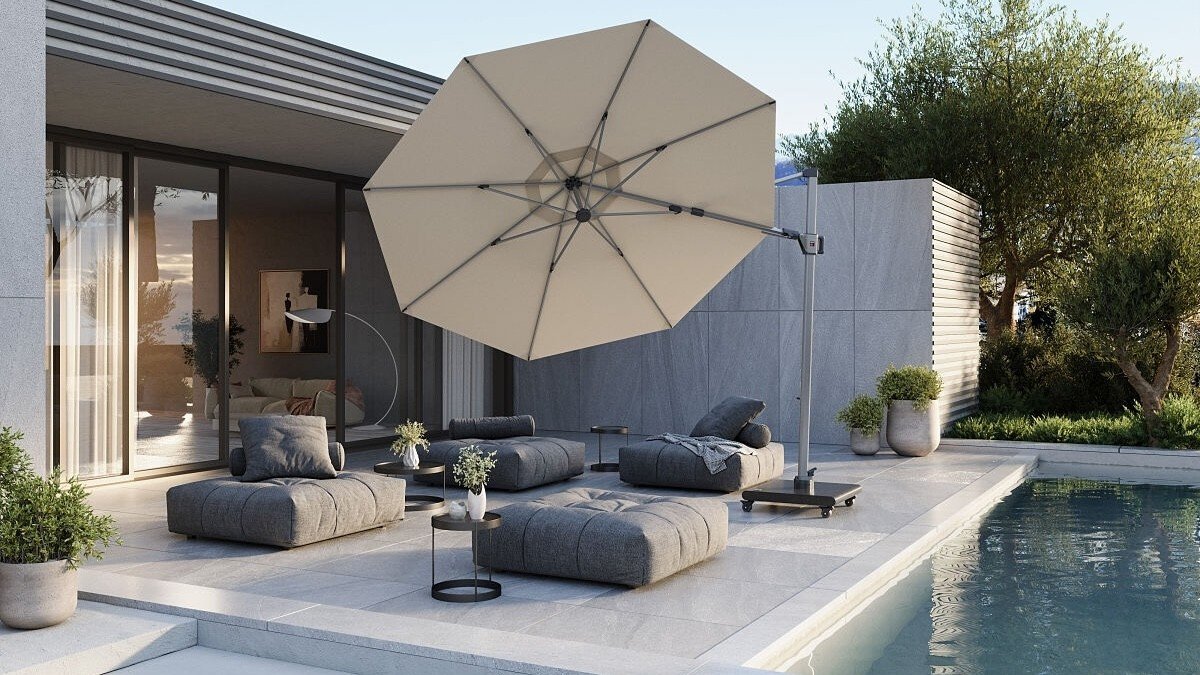
In engineering, Doppler showcased the Knirps 'Hyperion' range of cantilever parasols, emphasizing not just shade, but extreme architectural durability against storm winds and unpredictable weather. Crucially, the integration of gas fire tables directly into dining and deep-seating conversation sets has transitioned from a luxury niche to a mass-market expectation, providing localized heating that extends evening entertainment deep into Q4.
Buyer-Side Strategic Implications
Retailers must capitalize on the "shoulder season" by front-loading their Q3 and Q4 inventory with fire pit tables, infrared patio heaters, and heavy-duty cantilever umbrellas that provide robust shelter. By executing this strategy, buyers extend the outdoor category's revenue-generating window into the fourth quarter—a period that historically suffered a sharp drop-off in garden sales.
Furthermore, average basket sizes can be dramatically increased by training sales staff to bundle weather-resistant furniture covers, protective enclosures, and standalone heating elements alongside standard lounge and dining sets.